


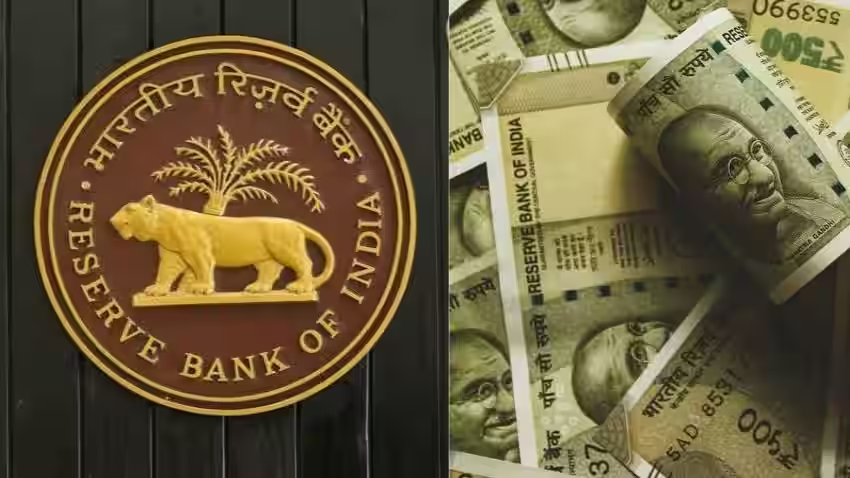
A central bank is the institution that manages a country’s currency, money supply and key parts of its financial system, and in India that role is played by the Reserve Bank of India (RBI). It operates under a legal framework that grants it a special status and responsibilities. One of its primary roles is to conduct monetary policy: by setting key policy interest rates and using other tools, it aims to keep inflation under control while supporting sustainable economic growth. Changes in these rates influence how expensive or cheap loans become for businesses and households.
The RBI is also the issuer and manager of the country’s currency, overseeing the design, printing and circulation of banknotes. It acts as the banker to the government, maintaining accounts, managing public debt and providing advice on financial matters. For commercial banks, the RBI functions as a “banker’s bank”: it holds their reserves, lends to them in times of liquidity stress, and sets rules for their operations. It regulates and supervises banks and certain financial institutions to maintain stability and protect depositors. Additionally, the RBI manages foreign exchange reserves, influences the external value of the currency, and oversees payment and settlement systems. Its decisions are felt in everyday life through loan EMIs, deposit interest rates, banking safety and overall financial confidence.






Leave a Reply