


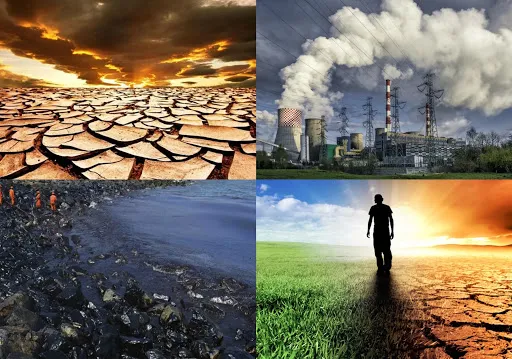
The environment is the foundation for all life, and pollution is one of the biggest threats it faces today. Air pollution comes from vehicle emissions, industrial smokestacks, construction dust, burning of waste and crop residues, and even household fuels. Water pollution arises from untreated sewage, industrial discharge, chemical run‑off from farms and careless disposal of plastics and other waste. Soil degradation, noise pollution, and the growing problem of e‑waste add to the burden. These pollutants damage ecosystems, reduce biodiversity, and directly harm human health, contributing to respiratory illnesses, heart disease and other chronic conditions.
Environmental problems are closely linked with climate change. Greenhouse gas emissions from burning fossil fuels and changing land use patterns trap heat in the atmosphere, leading to rising temperatures, extreme weather events, shifting rainfall patterns and rising sea levels. Addressing pollution and climate change requires action at multiple levels: strong and enforced regulations, clean technology, better urban planning, and changes in consumption patterns. Individuals and communities can contribute by reducing waste, using public transport, conserving energy and water, and participating in local environmental initiatives. While one person’s actions may seem small, collective changes and public pressure can push institutions and governments toward more sustainable policies.






Leave a Reply