


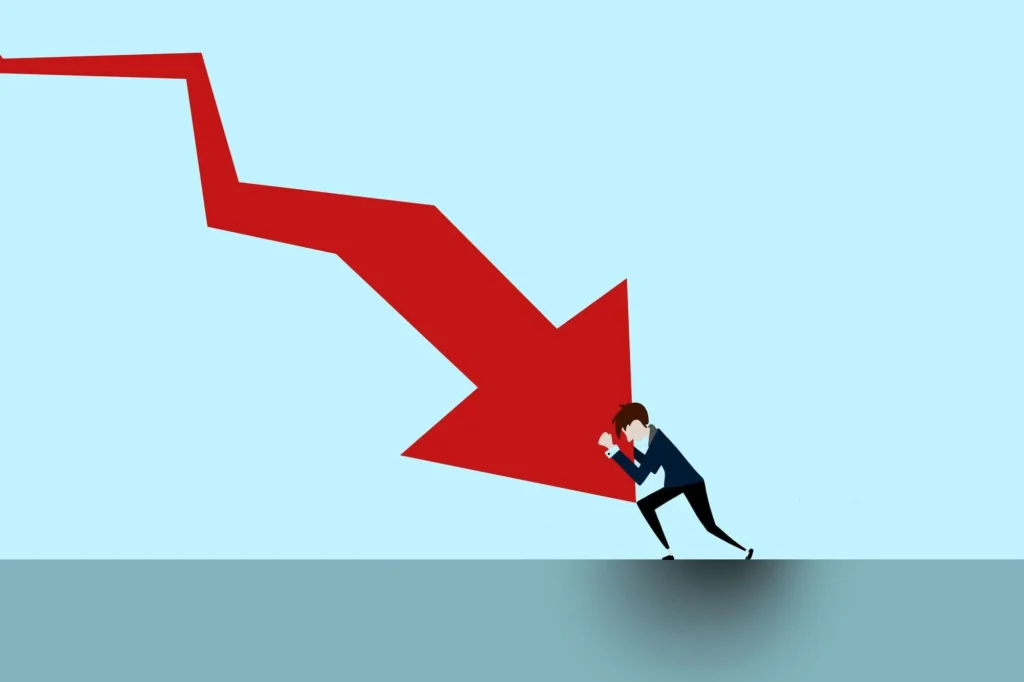
A recession is a significant decline in economic activity that spreads across the economy and lasts for a period of time, typically visible in falling GDP, rising unemployment, reduced incomes and lower industrial production. A common “rule of thumb” is that a recession occurs when an economy experiences two consecutive quarters of negative real GDP growth, although official definitions often rely on a wider set of indicators.
Recessions can be triggered by financial crises, sharp increases in interest rates, a collapse in consumer or business confidence, external shocks like wars or pandemics, or a combination of these factors. For ordinary people, a recession usually means fewer job opportunities, pay cuts or job losses, businesses closing, and difficulties in repaying loans. Governments and central banks respond with tools such as lowering interest rates, increasing public spending, tax relief, and targeted support to vulnerable sectors and households. Not every slowdown is a recession; sometimes growth simply becomes slower without turning negative, but when contraction is widespread and persistent, the social and political impact can be large.



Leave a Reply