


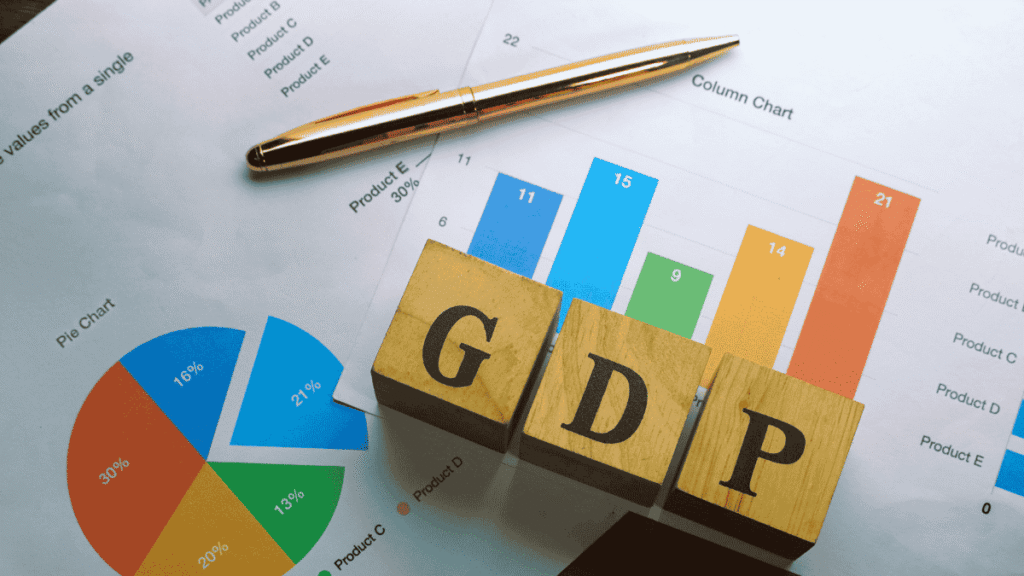
Gross Domestic Product, or GDP, is the total monetary value of all final goods and services produced within a country’s borders in a specific period, usually a year or a quarter. It is one of the most widely used indicators to judge the size and health of an economy. When GDP is growing, it usually suggests that production, income and spending in the economy are rising; when GDP shrinks, it signals economic trouble.
GDP can be looked at in several ways. Nominal GDP is measured at current prices, while real GDP is adjusted for inflation to reflect actual changes in output. GDP per capita divides total GDP by the population, giving a rough idea of average income. Economists can calculate GDP using the production method (summing value added across industries), the income method (wages, profits, rents), or the expenditure method (consumption + investment + government spending + net exports). However, GDP has limitations: it does not directly capture inequality, unpaid work like household care, environmental damage, or overall quality of life. That is why many experts treat GDP as an important but incomplete measure of development.




Leave a Reply